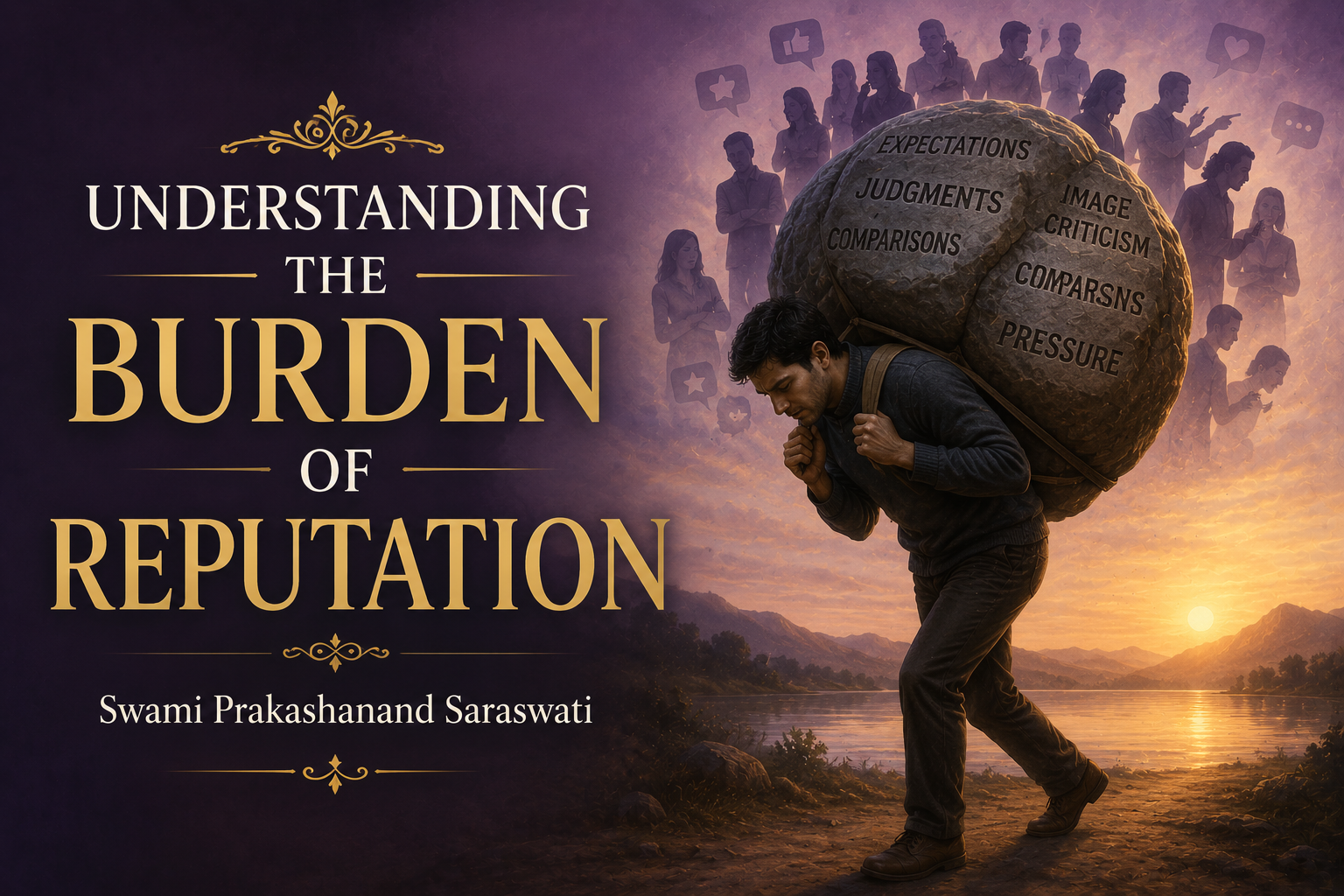
Reputation carries weight. People spend years building their societal standing through their behavior, work, and relationships. Because of this, any public criticism or scandal can feel deeply personal. Swami Prakashanand Saraswati explains that the burden of maintaining our “good” reputation becomes heavy when identity istoo dependent on how others perceive us.
A reputation exists in the minds of people. It is shaped by opinions, experiences, and public perception. The challengeis that these perceptions can quickly change. Praise may turn into criticism, and support may become opposition. When the mind depends entirely on one’s reputation for emotional stability, maintaining a semblance of peace becomes unlikely.
Swamiji teaches that this burden further increases when a person constantly tries to protect their public image. The mind becomes occupied with ruminationsabout what others are thinking and saying. Instead of focusing on present responsibility, attention shifts toward controlling outward perception. This creates mental exhaustion.
During a scandal, the pressure around societal reputation can become even stronger. Every conversation gains heightened importance; every reaction feels personal. The mind starts measuring its value through external response. Swamiji explains that this dependence creates fear because public opinion is unstable by nature.
Another reason reputation becomes a burden is attachment. The mind naturally becomes attached not only to respect but also to recognition. Once this attachment develops, even small criticisms feel threatening. Swamiji points out that attachment often increases emotional disturbance more than the situation itself.
He also explains that reputation and reality are not always the same. Public image can rise or fall based on incomplete understanding. A person may know their own intentions clearly, but society often reacts only to outward appearances. When the mind expects accurate understanding from others, disappointment becomes inevitable.
Swami Prakashanand Saraswati teaches that it is not careless to reduce the burden of maintaining a good societalreputation; itmeans placing greater importance on conduct than on image. Actions remain important, but obsession with perception weakens inner freedom.
Another valuableinsight is that maintaining our reputation often creates pressure to appear strong at all times. This pressure prevents honest reflection. Instead of understanding emotions calmly, the mind becomes focused on maintaining outward appearances. Over time, this creates internal tension.
Swamiji also points toward spiritual identity as a deeper foundation than reputation, which belongs to the external world. He explains that the soul exists beyond social labels and public opinion. Remembering this difference helps reduce emotional dependence on image.
A scandal often reveals how much weight the mind has placed on reputation. The more tightly identity is connected with public approval, the heavier the burden feels. Swamiji teaches that freedom begins when inner stability becomes more important than external recognition.
Reputation may influence society, but it should not completely control peace of mind. A balanced person understands the value of reputation without becoming trapped by it.
What others think may change with time, but deeply ingrained innertruth remains steady.
Radhey Radhey